
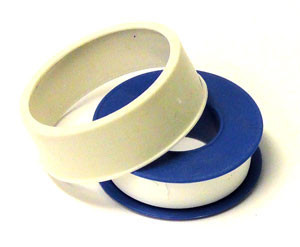
Stop the Leaks: The Master Guide to Using Teflon Tape on Air Compressors
When you’re dealing with high-pressure systems, a single microscopic gap in a threaded connection can lead to a cycling motor, wasted energy, and unnecessary wear on your pump. One of the most common questions we get at Master Tool Repair is: "Do I really need Teflon tape, and am I putting it on right?"
The answer is yes—but only if you use it on the right connections.
What is Teflon Tape (PTFE)?
Teflon tape, or Polytetrafluoroethylene (PTFE) tape, is a thread sealant used primarily on NPT (National Pipe Thread) fittings. Unlike straight threads, NPT threads are tapered. The tape acts as a lubricant, allowing the threads to be turned deeper and more smoothly, while simultaneously filling the gaps to create a pressure-tight seal.
How to Apply Teflon Tape Like a Pro
To ensure your air compressor holds its PSI, follow these four steps:
- Clean the Threads: Use a wire brush to remove old tape or pipe dope. A clean surface is essential for a bond.
- Clockwise Direction: This is the most important step. Hold the fitting in your left hand and apply the tape with your right, wrapping it clockwise (the same direction the fitting turns into the port). If you wrap it backward, the tape will unravel as you tighten the part.
- The "Two-Thread" Rule: Start the wrap two threads back from the end of the pipe. This prevents fragments of tape from breaking off and entering the air stream, which can clog your pressure switch or valves.
- Overlap and Tension: Wrap the tape 3 to 4 times around the fitting, pulling it tight so it settles into the grooves of the threads.
Crucial Warning: When NOT to Use Teflon Tape
Teflon tape is a miracle worker for NPT threads, but using it on the wrong connection is a recipe for a persistent leak.
Avoid using PTFE tape on:
- Compression Fittings: These rely on a brass ferrule compressing against a seat. Tape interferes with the nut's ability to drive that ferrule home.
- Rubber Gaskets and O-Rings: If a fitting has a rubber seal, the threads are only there to provide mechanical force. Adding tape can "bulk up" the threads, preventing the fitting from tightening enough to compress the gasket.
- Flared Fittings: These use a metal-to-metal cone seal. Tape on the threads will actually push the flare away from its seat, causing a high-pressure blowout.
Eric’s Expert Tip
"The biggest mistake I see is 'over-taping.' People try to fix a leak on a compression fitting or an O-ring joint by wrapping it in Teflon tape. Don't do it. Tape is for metal-to-metal tapered threads only. If you put tape on a fitting that has a gasket or a ferrule, you’re actually preventing the seal from seating, which will cause the very leak you're trying to stop." — Eric Trotman
Frequently Asked Questions (FAQ)
Q: Can I use Teflon tape on compression fittings?
A: No. Teflon tape should only be used on tapered pipe threads (NPT). Compression fittings, flared fittings, and inverted flares rely on metal-to-metal contact or O-rings for a seal. Tape can prevent these from seating properly.
Q: How many wraps of Teflon tape do I need for air fittings?
A: For standard 1/4" or 3/8" NPT air fittings, 3 to 4 wraps is the industry standard. Too little won't seal; too much can crack the female casting if you over-torque it.
Q: Is liquid pipe sealant better than Teflon tape?
A: Both have their place. Liquid sealant (pipe dope) is often better for larger fittings or high-vibration areas, but Teflon tape is cleaner, easier to store, and less messy for quick repairs.
Q: My hose has a rubber washer inside; should I tape the threads?
A: No. If a connection uses a washer, gasket, or O-ring to stop the air, the threads themselves don't need to be airtight. Adding tape here often leads to "false tightness," where the nut feels tight but the gasket isn't actually compressed.
Recent Posts
-
Stop the Leaks: The Master Guide to Using Teflon Tape on Air Compressors
When you’re dealing with high-pressure systems, a single microscopic gap in a threaded connection ca …Apr 1, 2026 -

Breaker Tripping? Troubleshooting Air Compressor Overload Issues
It’s a universal frustration: You’re mid-project, the motor hums for a second, and then—click—the br …Mar 25, 2026 -
The Heart of Your Pump: Understanding Pump Intake & Exhaust Valves & Their Failures
At Master Tool Repair, we talk to customers every day who are frustrated by a compressor that just i …Mar 19, 2026