
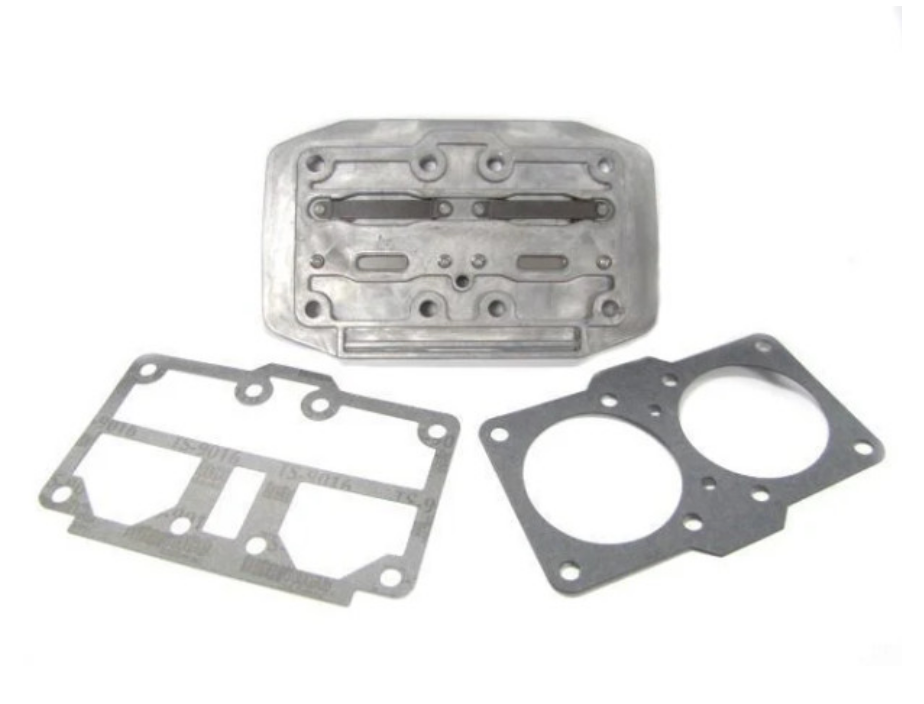
The Heart of Your Pump: Understanding Pump Intake & Exhaust Valves & Their Failures
At Master Tool Repair, we talk to customers every day who are frustrated by a compressor that just isn’t performing like it used to. Whether you are running a professional shop or a home garage, I know that a malfunctioning pump doesn't just mean a broken tool—it means a project has ground to a halt.
When a pump starts running hot, making strange noises, or taking forever to reach pressure, many owners fear the worst. However, in my experience leading this business, I’ve seen that the culprit is frequently a smaller, high-wear component known as the valves.
I like to think of the pump’s valves as the "heart" of your air compressor. Their function is critical and constant, but they are also one of the most common points of fatigue. Understanding how this part works is the first step in getting your equipment back online.
⚠️ Quick Summary: What Are Air Compressor Intake & Exhaust Valves?
Definition: An air compressor’s intake and exhaust valves are usually installed onto a flat component called the valve plate, located between the cylinder head and block. The inlet and discharge reed (or disc) valves regulate airflow. Its primary function is to ensure air moves in one direction—into the cylinder and then out into the tank—without leaking back through the intake.
How Do Air Compressor Intake & Exhaust Valves Work?
The intake and exhaust valves operate on pressure differentials created by the piston's movement. The valve plate acts as a gatekeeper for the air:
- The Intake (Suction) Stroke: As the piston moves down, it creates a vacuum. This forces the inlet valve open, drawing fresh air in through the filter.
- The Compression (Discharge) Stroke: As the piston moves up, it compresses the air. This pressure slams the inlet valve shut and forces the discharge valve open, pushing the air into the tank.
If either valve fails to seal, your compressor cannot build the pressure necessary to operate your tools.
How to Tell if Your Valves or Valve Plate Is Bad
If you are wondering why your compressor is struggling, check for these 5 primary symptoms of valve/valve plate failure:
- Slow Pump-Up Time: The pump runs continuously, but the tank fills at a fraction of its normal speed.
- Excessive Heat: The cylinder head becomes dangerously hot due to "re-compressing" air that isn't leaving the pump.
- Hissing/Blowing at the Intake: Air escapes back through the air filter during the compression stroke.
- Inability to Reach Cut-Out Pressure: The compressor stops building pressure before it reaches its maximum PSI.
- Metallic Clicking: Broken valve reeds may rattle or click inside the head assembly.
Troubleshooting: Valve Plate vs. Other Failures
|
Symptom |
Likely Cause |
Recommended Fix |
|
Air leaks out of intake |
Broken/Chipped Inlet Reed |
Replace Valve Plate Assembly |
|
Pump gets extremely hot |
Carbonized Discharge Valve |
Clean Head & Replace Valves |
|
Motor hums but won't start |
Bad Start Capacitor |
Replace Start/Run Capacitor |
|
Pressure builds very slowly |
Leaking Gaskets or Valves |
Install a Valve & Gasket Kit |
Why Valves & Valve Plates Fail: The "Master Tool" Perspective
As the owner of Master Tool Repair, I’ve seen that most valve failures aren't due to manufacturing defects, but rather environmental factors:
- Carbon Buildup: Using the wrong oil or running the pump past its duty cycle creates high heat. This turns oil into a "gunk" that prevents the valves from seating flat.
- Reed/Disc Fatigue: These thin metal reeds flex thousands of times an hour. Eventually, the metal loses its tension or snaps. In a pump with disc valves, the spring can lose tension or become dislodged.
- Dirty Air Filters: Dust particles that bypass a worn filter act like sandpaper, chipping the edges of the delicate valve seals.
?️ Eric’s Expert Tip: The "Light Test"With over 20 years in the shop, Eric Trotman recommends this quick diagnostic: "If you’ve pulled your valve plate and the reeds/discs look okay, but you're still losing pressure, hold the assembly up to a bright light. If you see even a sliver of light peeking through where the reed should be sealed against the plate, your pump is losing efficiency. In a high-pressure environment, a 'small' gap is a massive leak." |
Technical Specs: Choosing the Right Replacement
When sourcing a replacement, avoid "universal" parts. For a successful repair, you must match your Pump Model Number to the specific Valve Plate Assembly or Valve Kit.
At Master Tool Repair, we recommend replacing the entire assembly (Plate + Reeds + Gaskets, if applicable) rather than just the reeds or discs. A worn plate often has tiny grooves or heat-warping that will quickly destroy a new set of reeds.
Frequently Asked Questions (FAQs) About Valves & Valve Plates
Q: Can I just clean my valves or valve plate instead of replacing them?
A: While you can clean carbon buildup using a mild solvent and a soft brush, cleaning won't fix a warped plate or a fatigued reed/disc valve. If the metal has lost its "spring" or has tiny cracks, cleaning is only a temporary band-aid. For a reliable repair, replacement is the best route.
Q: Do I need to replace the gaskets when I change the valves or valve plate?
A: Yes, absolutely. Every time you "break the seal" by removing the cylinder head, the old gaskets are compromised. Reusing them almost always leads to air leaks. Our valve plate kits at Master Tool Repair typically include the necessary head and cylinder gaskets for this reason.
Q: Why is air blowing out of my air intake filter?
A: This is a classic symptom of a failed inlet reed/disc valve. When the inlet valve on the plate doesn't shut properly during the compression stroke, the air that should be going into your tank is pushed back out through the intake. This requires a valve plate inspection or replacement.
Q: How long do air compressor valves and valve plates usually last?
A: There is no set expiration date, but their lifespan depends on your duty cycle and maintenance. If your compressor is running in a hot, dusty environment or if you aren't changing your air filters regularly, the valves or valve plate will fail much sooner. In a well-maintained system, they can last for years of intermittent use.
Q: Is it hard to replace valves/a valve plate myself?
A: For most DIYers, it’s a very manageable job. It generally involves removing the head bolts, lifting the head, and swapping the plate. The most important steps are ensuring the mounting surfaces are perfectly clean and torqueing the head bolts back down to the manufacturer's specifications.
Find Your Replacement Parts Today
Don't let a faulty "heart" stop your business. Master Tool Repair specializes in parts for over 35 major brands and 2,000 models. If you aren't sure which kit you need, my team and I are here to help you find the right fit.
Recent Posts
-
How to Prep Your Air Compressor for Peak Performance: The Spring Maintenance Checklist
When the seasons shift, your air compressor faces new challenges. Changes in temperature and humidit …Apr 7, 2026 -
Stop the Leaks: The Master Guide to Using Teflon Tape on Air Compressors
When you’re dealing with high-pressure systems, a single microscopic gap in a threaded connection ca …Apr 1, 2026 -
Breaker Tripping? Troubleshooting Air Compressor Overload Issues
It’s a universal frustration: You’re mid-project, the motor hums for a second, and then—click—the br …Mar 25, 2026