
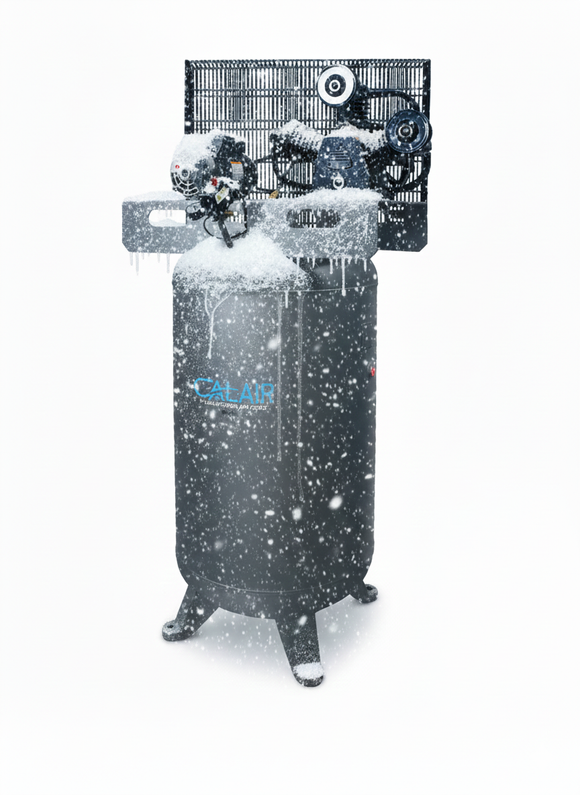
Cold-Start Proofing Your Air Compressor: A Practical Guide to Oils, Filtration, and Controls for Winter Reliability
Cold weather exposes weak links in any compressed air system. Thick oil, sluggish controls, and moisture turning to ice can push your motor and pump past their limits. Before the first freeze, take ten minutes to document your compressor: model and serial, motor HP, rated CFM and PSI, and the lowest ambient temperatures you expect. With those details, you can choose compatible parts and settings that keep your shop running.
This guide explains why compressors struggle in the cold, which oils and filters solve the root causes, and how to set your pressure switch and regulator for winter. You will also find a concise checklist you can run daily and weekly, plus clear criteria for sizing magnetic starters on 5 HP and larger units to protect against high inrush amps.
Why the Cold Hurts Compressors
- Oil viscosity rises as temperatures fall, which increases friction and start torque. The motor pulls higher current longer, stressing windings, switches, and belts.
- Air holds less moisture at low temperatures; water that was vapor at the pump condenses in the tank and lines as the air cools. Without proper draining and filtration, that moisture freezes in valves and tools.
- Pressure controls can drift under cold conditions. A switch set too high forces longer cycles and harder restarts. Regulators with water in the body can freeze and restrict flow.
Physics is simple here. Cold oil resists flow, so bearings and rings see boundary lubrication at startup; meanwhile, cold, dense intake air slightly increases volumetric load. The combined effect is higher starting load, slower spin-up, and more heat in the motor windings. Your job is to lower friction, keep water out, and set reasonable pressures.
Quick-Start Winter Checklist for Small Shops and Home Garages
Identify your model; confirm HP, CFM, max PSI, and lowest ambient temperature. Then apply:
Daily
- Aim for a storage temperature of 40 to 100 F when possible. Below 40 F, plan a longer warmup or use a lighter synthetic oil.
- Drain the tank at the end of each day. Open the air tank drain valve until water stops. This prevents overnight freeze-ups.
- Check the oil sight glass. Oil should sit at the midpoint. Top up only with the same oil type already in use.
Weekly
- Inspect belt tension and condition. A half-inch deflection at moderate thumb pressure is typical; cracked glazing or frayed edges mean replacement.
- Test the safety relief valve by pulling the ring briefly to confirm free movement and reseating.
- Crack open line filters to purge water; inspect bowls for cracks or clouding.
Monthly
- Verify pressure switch cut-in and cut-out with a gauge, and compare to motor plate and tank rating.
- Confirm regulated pressure delivers your tool’s PSI at flow. Check CFM/PSI by comparing tool behavior against your compressor rating and listening for excessive cycling.
Best Oils for Cold Weather, Reciprocating vs. Rotary Screw
Choosing the right viscosity is the biggest lever you have in winter. Match oil to compressor type and expected ambient temperature.
Reciprocating compressors
- Preferred base: full synthetic non-detergent compressor oil
- Viscosity: ISO 68 for moderate temps above 40 F; ISO 46 for 10 to 40 F; ISO 32 for sustained operation near or below freezing.
- Benefits: better cold start flow, stable film at operating temp, reduced carbon formation on valves and rings.
Rotary Screw Compressors
- Use OEM approved synthetic PAO or ester-based compressor fluids designed for screws.
- Viscosity: ISO 46 in most heated shops; ISO 32 for unheated spaces where starts happen below 40 F.
- Change intervals: follow OEM guidance; cold starts with short cycles justify shorter intervals due to condensation.
Oil Change Tip
- Never mix types. If switching viscosity grades, drain hot, replace filter, and run briefly to flush residual oil before final fill.
Filtration and Drying to Prevent Ice in Tools
Moisture control is essential when air and lines are cold.
- Primary water separator, installed after the tank: use a mechanical water separator with 5 to 40 micron element for bulk water removal. Drain automatically or daily by hand.
- Coalescing filter for oil and fine mist: 0.01 to 0.1 micron for paint, instrumentation, and high-precision tools. Place downstream of the separator.
- Particulate prefilter: 5 micron is a good balance for general shops; 1 micron for sensitive tools.
- Desiccant dryer for unheated spaces: consider an in-line desiccant dryer if icing persists; monitor color-changing beads and regenerate as directed.
- Regulator pairing: always follow filtration with a regulator to stabilize tool pressure after water removal.
Selection Criteria
- Bowl type: metal bowl with sight shield is safer in cold, rough service.
- Drain style: auto drain for separators; manual drains require discipline in winter.
- Micron rating: choose the highest micron that still protects your process to minimize pressure drop.
Setting the Pressure Switch and Regulator for Winter
A small tweak to limits reduces hard starts and short cycles.
- Verify ratings. Motor, pump, tank, and safety valve ratings must exceed your chosen cut-out.
- Set cut-in and cut-out with a 20 to 40 PSI differential for most piston units. In winter, lowering cut-out by 10 to 15 PSI from summer settings can reduce start torque and moisture load without starving tools.
- Avoid excessive cut-in increases. Too high a cut-in shortens cycles and increases starts per hour, which is tough on cold oil and motors.
- Regulator setting: set tool pressure at the tool’s spec under flow, not at idle. Add 5 to 10 PSI headroom if long hoses or filters cause drop.
- Confirm delivery. Pull the trigger on your hungriest tool and watch pressure. If pressure sags or the compressor cannot recover, verify CFM/PSI against the nameplate and consider staging tasks until the room warms up.
For worn or misbehaving controls, see air compressor pressure switches for compatible adjustable models.
Match Voltage, Phase, Pressure Range, and Port Configuration
Cold bearings and thick oil make inrush current longer and higher. A properly sized magnetic starter protects the motor and the pressure switch contacts.
When to Install
- Any 5 HP or larger electric motor.
- Frequent cold starts, long line runs, or marginal supply voltage.
- Pressure switches showing burned or pitted contacts.
Sizing Basics
- Match voltage and phase to your motor.
- Choose an NEMA or IEC starter rated above full-load amps; thermal overloads should be set to the motor’s nameplate FLA.
- Consider high-inrush duty. Many screw and heavy piston units benefit from class 20 overload curves to tolerate brief cold-start surges without nuisance trips while still protecting the windings.
If your existing motor struggles at startup or the switch runs hot, upgrading the air compressor motors or adding a magnetic starter is a safety and reliability win.
Selecting Compatible Parts Quickly
Have your model number, motor HP, CFM, PSI, and ambient temperatures ready. Then:
- Oil: choose synthetic by compressor type and lowest ambient temperature; ISO 32 or 46 for most cold shops.
- Filters and separators: size by CFM and line size; use a separator first, then coalescing, then regulator. Drain daily.
- Valves: verify thread size and pressure rating. The safety relief valve should be about 30 PSI higher than cut-out.
- Pressure switch and regulator: match voltage, pressure range, and porting. Confirm cut-in and cut-out after installation.
Check valve: replace if the compressor hard starts against head pressure or bleeder lines stay pressurized.
Recent Posts
-
How to Prep Your Air Compressor for Peak Performance: The Spring Maintenance Checklist
When the seasons shift, your air compressor faces new challenges. Changes in temperature and humidit …Apr 7, 2026 -

Stop the Leaks: The Master Guide to Using Teflon Tape on Air Compressors
When you’re dealing with high-pressure systems, a single microscopic gap in a threaded connection ca …Apr 1, 2026 -
Breaker Tripping? Troubleshooting Air Compressor Overload Issues
It’s a universal frustration: You’re mid-project, the motor hums for a second, and then—click—the br …Mar 25, 2026