
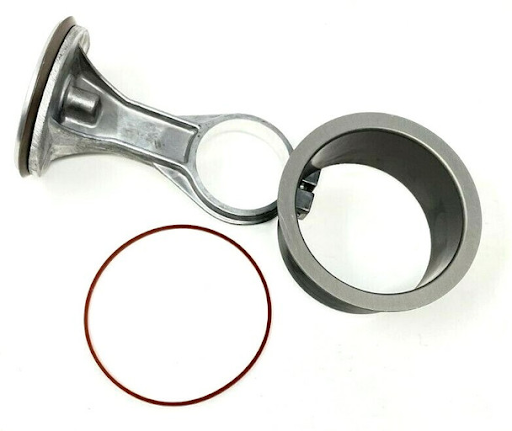
Power Loss? How to Identify & Replace Worn Air Compressor Piston & Cylinder Kits
If you’ve noticed your air compressor is taking longer than usual to reach full pressure, or if it seems to be running constantly without ever hitting its "cut-out" point, you aren't just imagining things. Your machine is losing its muscle.
The heart of your compressor’s performance lies in the Piston and Cylinder Kit. Over time, friction and heat take their toll, leading to air leaks and a massive drop in CFM (Cubic Feet per Minute) output.
Signs Your Piston and Cylinder Are Worn Out
Before you assume you need a whole new compressor, look for these three "red flags":
- Slow Recovery Time: If a tank that used to fill in 3 minutes now takes 6 (and barring any obvious air leaks), your piston ring is likely worn, allowing air to "blow by" rather than being compressed.
- Excessive Heat: While compressors get hot, a worn kit causes the motor to work overtime, leading to overheating and potential motor failure.
- Visible Scoring: If you open the pump and see deep scratches or grooves on the cylinder walls, the seal is broken.
Why Replace the Kit?
Many DIYers try to replace just the piston ring. However, because the piston and cylinder wear against each other, they develop a unique "wear pattern." Installing a new ring into an old, out-of-round cylinder often leads to premature failure. A complete kit ensures a perfect seal, restoring your factory-spec pressure.
How to Replace Your Piston/Cylinder Kit
Always disconnect power and drain all air from the tank before starting.
- Access the Pump: Remove the shroud or housing to expose the cylinder head.
- Disassemble the Head: Unscrew the bolts holding the head and valve plate in place. Note the order of the gaskets!
- Remove the Old Cylinder: Slide the cylinder sleeve off. You will see the piston and the connecting rod.
- Swap the Piston/Sleeve: Most modern oil-free kits come with the piston already pressed into the sleeve. Disconnect the old rod from the crankshaft and install the new assembly. If the piston rod and cylinder come separately, always pull the piston rod through the top of the cylinder when installing it! Pushing the piston rod from the bottom of the cylinder risks tearing the piston ring.
- Reassemble with New Gaskets: Never reuse old gaskets. They are compressed and won’t provide an airtight seal twice.
Test Run: Turn the unit on and check for leaks. You should notice an immediate difference in how fast the tank reaches pressure.
Recent Posts
-
Stop the Leaks: The Master Guide to Using Teflon Tape on Air Compressors
When you’re dealing with high-pressure systems, a single microscopic gap in a threaded connection ca …Apr 1, 2026 -
Breaker Tripping? Troubleshooting Air Compressor Overload Issues
It’s a universal frustration: You’re mid-project, the motor hums for a second, and then—click—the br …Mar 25, 2026 -
The Heart of Your Pump: Understanding Pump Intake & Exhaust Valves & Their Failures
At Master Tool Repair, we talk to customers every day who are frustrated by a compressor that just i …Mar 19, 2026