
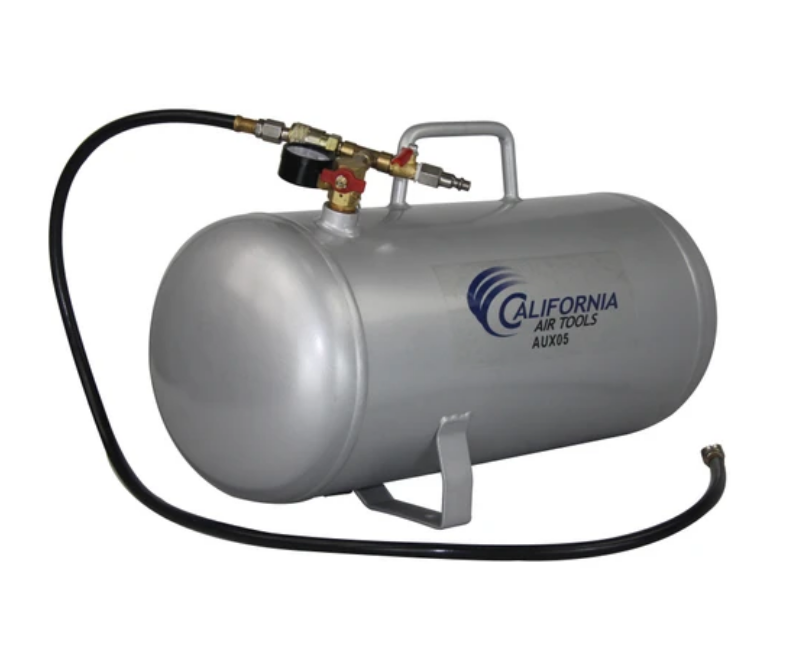
How to Use Air Compressor Auxiliary Tanks to Boost Your Air Storage
If your air compressor is constantly cycling on and off, or if your tools lose power during heavy-use tasks like sandblasting or painting, you don’t necessarily need a bigger compressor. You likely need more air volume. An air compressor auxiliary tank (also known as a surge tank or receiver tank) is the most effective way to increase your system’s capacity without the high cost of a secondary motor.
What is an Air Compressor Auxiliary Tank?
An auxiliary tank is a secondary pressure vessel connected to your primary compressor. It stores extra compressed air, acting as a reserve. When your tool demands a high volume of air, it pulls from both the main tank and the auxiliary tank, preventing the pressure drop that often stalls pneumatic equipment.
The Primary Benefits of Adding Storage
- Reduces Motor Wear: By increasing storage, your compressor cycles less frequently. This prevents overheating and extends the life of your pressure switch and motor.
- Consistent Pressure: For high-demand tools, an auxiliary tank provides a "buffer," ensuring that the CFM (Cubic Feet per Minute) remains steady even during peak usage.
- Moisture Control: Extra distance and tank surface area allow the compressed air to cool. As the air cools, moisture drops out in the auxiliary tank rather than reaching your tools.
Eric’s Expert Tip
"When plumbing in an auxiliary tank, always use a hose or pipe with a diameter equal to or larger than your compressor’s discharge port. If you use a restrictive, narrow hose to connect the two tanks, you’ll create a bottleneck that prevents the auxiliary tank from delivering the air volume your tools are screaming for."
The Bottom Line: Why Use an Auxiliary Tank?
To maximize pneumatic efficiency, an auxiliary tank provides additional air volume (gallons) to prevent pressure drops. This setup is ideal for DIYers and shops using high-CFM tools on low-gallon compressors. It bridges the gap between a portable unit and a stationary industrial system.
FAQ: Air Compressor Auxiliary Tanks
Q: Does an auxiliary tank increase my compressor's horsepower?
A: No. It increases the volume of air you have stored (gallons), but it does not change the speed at which your compressor pumps air (CFM).
Q: Where should I place the auxiliary tank?
A: For best results, place it near the point of use. If your compressor is in the garage but you are working in the driveway, putting the tank closer to your tool ensures maximum pressure at the trigger.
Q: Do I need a safety valve on an auxiliary tank?
A: Yes. Every pressure vessel in your shop must have its own ASME-certified safety relief valve and a moisture drain valve to ensure safe operation.
Q: How do I connect the two tanks?
A: Connect the discharge of your main compressor to the inlet of the auxiliary tank using a high-flow coupler. Ensure the auxiliary tank is rated for a higher PSI than your compressor’s cut-out pressure.
Recent Posts
-
Air Compressor Pumps 101: Understanding the Heart of Your Machine
If you rely on compressed air for your workshop, automotive garage, or industrial facility, you know …Jul 1, 2026 -
Common Mistakes to Avoid When Repairing Your Air Compressor
Fixing your own air compressor is an excellent way to save money, minimize project downtime, and ext …Jun 25, 2026 -
Ditch the Rust! Manual vs. Automatic Air Compressor Drain Valves
Every time you run your air compressor, physics works against your machine. As air compresses, it he …Jun 18, 2026