
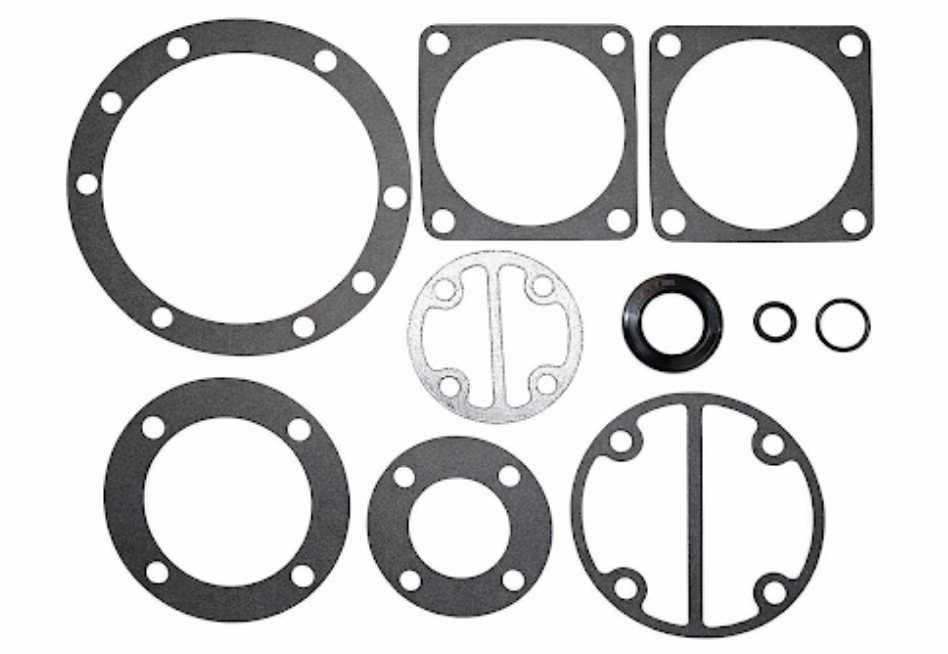
Essential Air Compressor Gasket & O-Ring Kits: The Foundation of a Leak-Free System
Air compressors are the workhorses of any shop, but their power depends entirely on the integrity of their seals. When people think of compressor maintenance, they often focus on oil changes or air filters. However, the true foundation of a high-performing, efficient system lies in the smallest components: gaskets and o-rings. At Master Tool Repair, we see thousands of machines lose pressure—and ultimately fail—simply because these critical barriers were ignored.
Why Gaskets and O-Rings Are Non-Negotiable
In an air compressor, gaskets create a static seal between two flat surfaces, such as the valve plate and the cylinder head. O-rings, conversely, are typically used in dynamic or high-pressure applications to prevent air from escaping through rounded junctions.
When these components degrade due to heat, friction, or age, your compressor has to work twice as hard to reach its target PSI. This leads to overheating, increased energy costs, and premature motor failure. Replacing these seals isn't just about stopping a "hissing" sound; it’s about protecting the lifespan of your pump.
The Benefit of Complete Kits
We always recommend purchasing a complete gasket and o-ring kit rather than individual pieces. When you tear down a head to replace one leaking gasket, the surrounding seals have already been subjected to the same heat and pressure cycles. Reusing an old o-ring after breaking its original seat is a recipe for a secondary leak. A dedicated kit ensures that every interface in the assembly is refreshed simultaneously, providing a "factory-new" seal.
Note: Always search by your manufacturer’s model number (and type number, if applicable) when purchasing a new gasket/seal kit. Don’t guess!
Eric’s Expert Tip
"When installing new gaskets, never use RTV silicone or gasket maker unless the manufacturer specifically calls for it. These materials can squeeze into the valve area, preventing the reed (or disc) valves from seating properly and causing a massive drop in CFM. Always install your Master Tool Repair gaskets dry and clean for the best seal."
FAQs
Q: How often should I replace my air compressor gaskets?
A: Most manufacturers recommend a top-end inspection every 500 to 1,000 hours of operation. However, if you notice the compressor taking longer to reach "cut-out" pressure, it is time to check the gaskets for leaks.
Q: What causes o-rings to fail prematurely?
A: Heat is the primary enemy. If your compressor is cycling too frequently (short-cycling) or is kept in a poorly ventilated area, the rubber in the o-rings can become brittle and crack.
Q: Can I make my own gaskets from a sheet of material?
A: While possible in an emergency, it is not recommended. Modern compressor gaskets are often precision-engineered with specific thicknesses to maintain proper "head clearance." Using a material that is too thick or too thin can lead to the piston hitting the valve plate or a significant loss in compression.
Recent Posts
-
Air Compressor Pumps 101: Understanding the Heart of Your Machine
If you rely on compressed air for your workshop, automotive garage, or industrial facility, you know …Jul 1, 2026 -
Common Mistakes to Avoid When Repairing Your Air Compressor
Fixing your own air compressor is an excellent way to save money, minimize project downtime, and ext …Jun 25, 2026 -
Ditch the Rust! Manual vs. Automatic Air Compressor Drain Valves
Every time you run your air compressor, physics works against your machine. As air compresses, it he …Jun 18, 2026